One would be hard-pressed to find a player with a more accomplished youth soccer career than Karlie Young (née Paschall). With a long list of accolades, both individually and with her Tennessee SC team, Young excelled at the highest levels of US Youth Soccer.
She went on to make 74 appearances for the Duke women’s soccer team. Then, in the midst of her senior season, she stepped away.
Or, more accurately, she stepped off the playing field and into a new role.
The COVID-19 pandemic led to the 2020-21 season being split and extended into the spring — a time when college seniors typically shift their focus to lining up jobs rather than lacing up cleats. Young knew her body was no longer set to sustain a professional career as a player, so she approached then-Duke coach Robbie Church with a request.
“I said, ‘Is it OK if instead I step into the sports science role for the team and that can be my focus?’” Young recalled. “… Luckily, he was amazing and said, ‘Absolutely. If that’s the next step in your career, we want to support that.’”
That moment represented a turning point in a sports journey that saw Young pivot from athlete to scientist. Now, less than five years since she graduated from Duke, the 27-year-old Young has quickly compiled an impressive resume working in sports science — helping athletes to chase their potential.
As she enjoys her early years the profession, it’s the experiences and relationships she gained in the first part of her journey — as a player who reached some of the highest levels in soccer — that set the stage for a post-playing career that now sees her impact reach athletes in a variety of sports.
THE PLAYER
When reflecting on her memories of her youth soccer career, Young’s first thoughts go to her team. In her time with Tennessee SC, her squad won eight State Cups, five Southern Regional titles and finished with back-to-back US Youth Soccer National Championships in 2016 and 2017.
Young was a pivotal player for those teams, as she accumulated an impressive collection of individual awards — including five National Championship Best XI honors and a National Championship Golden Ball award as MVP.
Ronnie Woodard, a director at Tennessee SC who coached Young for four years in the heart of her youth career, praised Young’s talent, understanding and technical execution — a combination of abilities that led to Young playing up a year in age.
The intangibles beyond athletic talent also pushed Young to the top, as Woodard said she was a selfless player who put the team’s needs above her own. She was dedicated to educating herself with the goal of team success as the ultimate motivator.
“She was a sponge. She loved learning,” Woodard said. “She was committed to her self-reflection and her self-training off the field. If you had conversations on the field. She would take that information, she would go home, she would reflect on it, and then she would update her individual personalized plan that she had for herself for development.
“Then she would attack those moments, and you would see a drastic improvement in every area that you would have a conversation with her.”
The commitment to learning as a player is an early example of a common theme in Young’s journey. Young credited the club’s staff and Woodard — a former Duke player, herself, who helped connect Young with her future college program — with creating an environment that encouraged learning.
Through all their winning, one of the keys to Young and the team’s success was their acceptance of the opposite: failure.
“Some of the coolest things I remember at the training grounds where we played every week was the level of freedom and creativity we had in that space,” Young said. “There was always a very safe space to fail as a player, which is a quality of training I think is severely underappreciated in the current landscape of sports. And I had that as a player, to be very free and very creative, which I’m very grateful for.”
That provided a foundation as a player that Young could lean on when she ventured on her own to participate in the US Youth Soccer Olympic Development Program (ODP). An ODP player for more than five years, she said the individuality and pressure created a far different environment for some of the U.S.’s top players than they were accustomed to in their typical club settings.
“You go into those environments, and you’re playing against the best of the best in each region across the country,” Young said. “And it’s for the stakes of being in the national team pool or getting invited to like a national team training center to eventually make the national team, so it was a very different environment.”
Her showings with ODP and her club team did help Young become part of several U.S. Soccer youth national teams, as she competed with the U-14 through U-20 teams — traveling to Europe multiple times to play.
Young’s final season with Tennessee SC proved to be a special one. After five years competing in original national format of the National League, the team claimed its first division title with a rare 7-0-0 record. That set the table for the summer, where Tennessee SC set out to defend the National Championship title it claimed the year before.
That July, the team advanced to the 2017 title game, where Young assisted the opening goal and scored the second to put her team up, 2-0. With Tennessee SC holding on to a 2-1 lead early in the second half, she was tripped from behind and sustained a shoulder injury that ended her youth career 30 minutes earlier than expected.
Set to report to Duke for her freshman preseason the next day, and with the championship game still in the balance, Young was forced to go to the hospital.
“We had literally pulled into the hospital parking lot, and my coach called me and said, ‘Hey, we just won. I got you a champions hat and all the things,’” said Young, who would later learn she also earned the Golden Ball as the championship’s top player. “I literally made my mom turn around just so I could come back for the ceremony. Afterward, I went back to the hospital to get imaging and all that, and then had to get on a plane about three hours later to fly to Duke.”
THE STUDENT
Despite a delayed start to her college career while recovering from the shoulder injury, Young appeared in 24 games as a freshman at Duke and scored her first two goals in a NCAA Tournament win. As a sophomore, she was a team leader in minutes played before a ruptured Achilles just days before the start of the 2018 NCAA Tournament presented her with the first major injury of her playing career.
Young, who studied psychology, said the dynamics that bonded her and her teammates when competing on the field proved to be just as impactful as a support system when coming back from the injury.
“Uplifting one another and just being there for each other when things get really hard is one of the testaments of Duke,” Young said. “The team culture there was just beautiful.”
Young did make her way back to the field to start the season-opener of her junior season with the Blue Devils, as she made 31 total appearances over her junior and senior seasons. But the time spent rehabbing the Achilles injury midway through her Duke playing career set the early foundations for the path she ultimately chose to take.
As she went through her rehab process, Young wore a GPS tracker that collected all kinds of data. Her curiosity in how that data was applied to her performance and return to the field led Young to reach out the Duke physical therapist Ciara Burgi.
“You can tell Karlie has an analytical brain,” said Burgi, who is now the Director of Health and Performance for the WNBA’s Las Vegas Aces. “She likes solving problems. She likes putting pieces together. She’s a very curious person.
“I think she was attracted to psychology initially because she’s a relational person and cares about people a lot. That was a piece of the whole puzzle to what feeds and fuels her brain. She started getting exposed to analytics and data and math, and I think it used a larger of bandwidth of who she is and her passions.”
As Young went into her junior year at Duke, she continued asking Burgi more questions about sports science and the meaning behind the data the staff was gathering. Burgi said Young’s passion for the subject was evident very early on, as she “jumped in with all 10 toes.”
Young asked Burgi to create a syllabus for her and said she would buy her own textbook. While some college students may look for any reason to skip a class, Young actually created an extra one for herself.
“We would meet once a week and basically discuss all these sports science and physiology topics,” Young said. “And she would just teach me everything that she knew about sports science at the time. And so, my junior year, I kind of added this to my course load because I was just really interested in it.”
When Burgi left to take a job with the NFL’s Houston Texans, Young took what she had learned and began reaching out to Duke’s teams to see if she could help manage their performance data. She continued doing side projects while playing the fall portion of her senior soccer season before talking to Church and making the decision to put more focus on sports science in the spring.
As she continued in what she described as a self-created internship role in the athletics department, Young worked a lot with the Duke field hockey team in the spring of her senior year. When she graduated in May 2021, the team offered her a job as its sports scientist.
“I kind of bet on myself to try and create a role in the department,” Young said. “And Pam Bustin, the head coach of Duke field hockey, totally took a bet on me. She was like, ‘You seem really smart. You seem to want to really work hard. We’re going to take a chance on this.’
“Through that bet on me, she totally launched my career in the coolest way.”
THE PROFESSIONAL
In July 2021, Young started as the Performance Data Analyst for Duke field hockey. She said it provided a great working environment for her first full-time job, and the Blue Devils’ athletics website even featured her in an article that highlighted her transition from soccer player to sports scientist.
The satisfaction in her professional life was soon matched by a personal milestone. In October 2021, she married her husband, Zeke Young, a former member of the Blue Devil baseball team whom she dated throughout her time at Duke.
Her commitment to their relationship had helped add clarity when she stepped away from playing soccer. And when Zeke’s job required he move in 2022, the couple left Durham, N.C., and Young’s time working with the Duke field hockey team came to an end.
That fact was unknown to Ryan Alexander, Director of High Performance for MLS’s Atlanta United. Alexander knew Young from his time as a sports scientist with U.S. Soccer, when he worked with the women’s youth national teams on which Young played. He came across the Duke Athletics article on Young’s ventures into sports science, and Alexander reached out to Young on LinkedIn to see if the two could catch up.
“This was right after I’d moved to Atlanta for my husband’s job,” Young said. “I’d actually been there for a single day, and he calls me and two minutes into the phone call is like, ‘Hey, is there any chance you’d ever consider moving to Atlanta?’
“I was like, ‘Wait, this is crazy. I moved to Atlanta yesterday for my husband’s job.’ He said, ‘Great, I have a job for you. Do you want to come work at Atlanta United?’”
Coming off the positive experience with the Duke field hockey team, and being aware of the cutthroat nature of professional sports, Young didn’t immediately accept. She talked about it with Zeke and asked Alexander if she could see the environment. In her visit to the club, Young ended up chatting with Alexander for six hours and knew upon leaving that she was 100 percent committed to taking the job.
As was the case with her youth soccer club and college program, Young’s first recollections of Atlanta United focused on the culture and leadership, which she called a “diamond in the rough of pro sports.”
She started working there in the fall of 2021 as a fitness coach — doing roles similar to a strength and conditioning coach. While OK with that role, it wasn’t what she ultimately wanted to be doing. Because of her good relationship with Alexander, she was able to talk to him, and they agreed they’d tweak the role as they went along.
When more staff was added to the department, Young was freed up to do more sports science work. By March 2023, she became their Head of Developmental Performance.
In that role, she worked with Atlanta United’s second team and all the academy teams, leading all strength and conditioning, medical personnel and sports science staff. She’d eventually oversee a seven-person department.
Though she never talked about her playing background with the teams, the young players at Atlanta United found out. Young would incorporate technical work into the warm-ups she created for the teams. When demonstrating, she’d lace a low, driven ball across the turf — a display of technical ability that would generate a buzz from the boys. That would prompt some players to take to the internet to look into the team’s sport scientist to discover her impressive playing background.
“When they found out about it, obviously, it spreads like wildfire,” Young said. “And then it’s just funny because, especially with guys, that means a lot.”
Now that Young has left Atlanta United, she’s the one doing some research on the players, as she keeps tabs on the progressing careers of the young athletes she worked with in Atlanta.
As Young speaks — with an Atlanta United scarf framed between Duke plaques and her Duke degree on the shelves behind her — she proudly notes that five academy players are currently with the first team for preseason, and three or four signed first team contracts shortly after she left the club.
“I still root for the team, and I watch all their games and still keep in touch with all the staff, which is cool,” Young said. “I didn’t expect that in this transition. I expected that once I left those relationships might fall off. But I’ve kept in touch with probably 90% of the people I worked with, which has been awesome.”
Now living in Savannah, Ga., Young has settled into her current position as an account manager with PlayerData, where she’s worked for nearly a year.
Part of her job is ensuring clients have no issues with their GPS units, while the other half is providing sports science analysis. With that, she’ll produce a lot of educational content to help teach coaches how to use GPS and the benefits for their team. That includes how to properly interpret certain metrics, plan out training sessions and prevent injuries.
The client list varies and is growing. A lot of Young’s clients are youth clubs, as well as high schools and colleges at the Division II and Division III levels. Their success in those areas has opened opportunities with even more organizations.
Young listed several new PlayerData users, including U.S. Soccer and all its national teams, along with a handful of NWSL teams and MLB’s Boston Red Sox, Tampa Bay Rays and Houston Astros.
Young said her background playing soccer at a high level does help when working with all teams, but especially the soccer clubs, which remain their primary clients.
“One of the biggest gaps in sports science right now is you have really, really brilliant people who understand physiology and science, and know little about sports,” Young said. “Then, on the other side of the scale, you have coaches who understand sport and talk in that language, who know nothing about science or physiology. And then you put them in a room together, they have no clue how to communicate.”
Being able to bridge that communication gap has been “massive” for Young. Last month, she put that ability into practice when she led a field session about using GPS for return to play at the United Soccer Coaches Convention in Philadelphia.
While in town, she and a few colleagues enjoyed testing out racing simulators at an F1 Arcade. Zeke is a big racing fan, and Young thinks F1 is a “really cool sport because there’s so much math involved.”
That’s another example of Young’s tendency to dive into the “Why?” behind the actions, which Burgi saw first-hand years earlier. The passion and curiosity — combined with her ability to relate to the athletes, coaches and scientists — continue to allow Young to dig deeper into the science behind it all.
“I think that’s what Karlie really loves about data — being able to dive into the complex questions,” Burgi said. “She’s not interested in simple things. She’s interested in putting the complex web of pieces together. Because she has a background in soccer and sport, she was able to get to those complex questions, which feed her soul, a little more quickly.”
THE PERSON
In the various parts of Young’s journey, she has amassed goals, assists, championships, knowledge, experience and job titles. And each step of the way, she’s added relationships.
Connections made as a player and student are still present in her professional life today.
Burgi, who was a bridesmaid in Young’s wedding, said their relationship evolved from mentor-mentee to a true friendship that has kept them in touch even after their Duke days.
Meanwhile, Young and Woodard’s paths crossed just two months ago at the NWSL Combine, where Young worked with PlayerData and Woodard served as one of four coaches for the event.
“We were reunited for several days down there and had an opportunity to catch up,” Woodard said. “But it’s like we never lost a beat.”
Young has enjoyed the fact she and Woodard continue to have a thread connecting them through different stages of life, and she’s valued having Woodard as a mentor — in sport and in life — dating back to their time together at Tennessee SC.
Nearly 10 years after coaching Young and her teammates to the National Championship, Woodard is proud of the success Young has had, which she said is a direct result of the support system she’s built up and her makeup as a person.
“She’s going to go down as a pioneer one day,” Woodard said. “Those of us that are older and played back in Title IX, you look, and you want to pass the torch on to someone like Karlie — who can then carry it on for the future generations and just makes our sports stronger and stronger.”
Top image courtesy of Karlie Young.
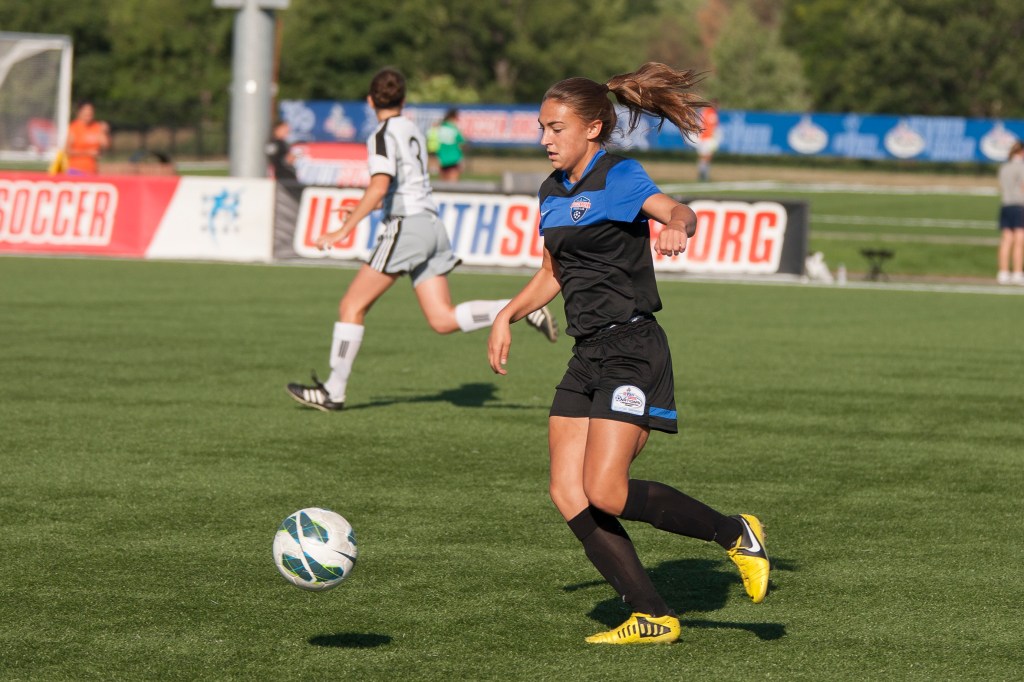
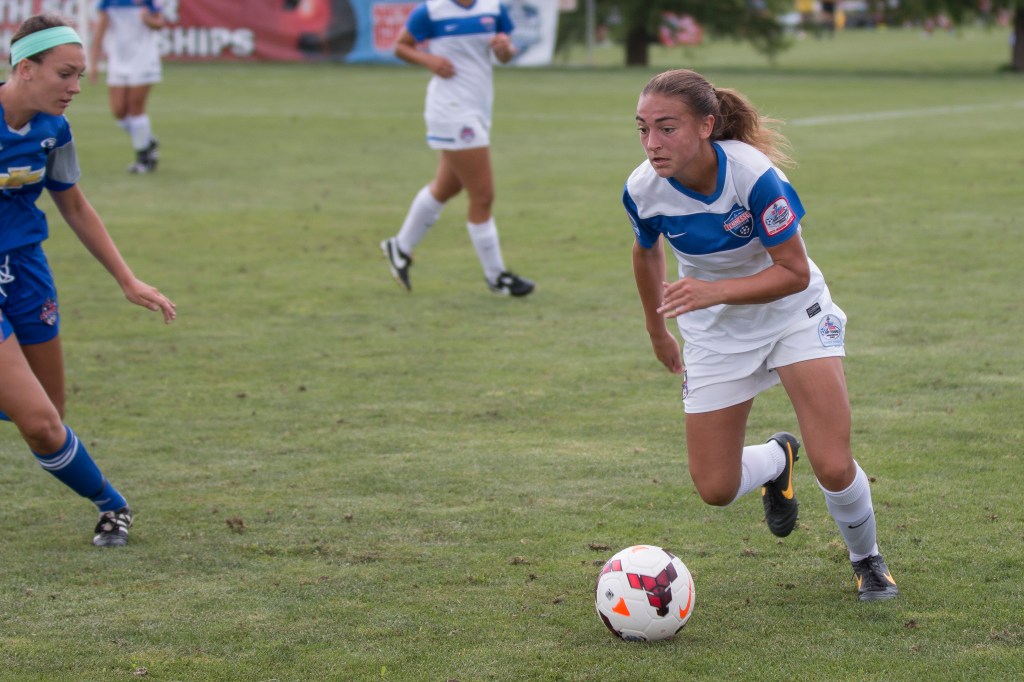
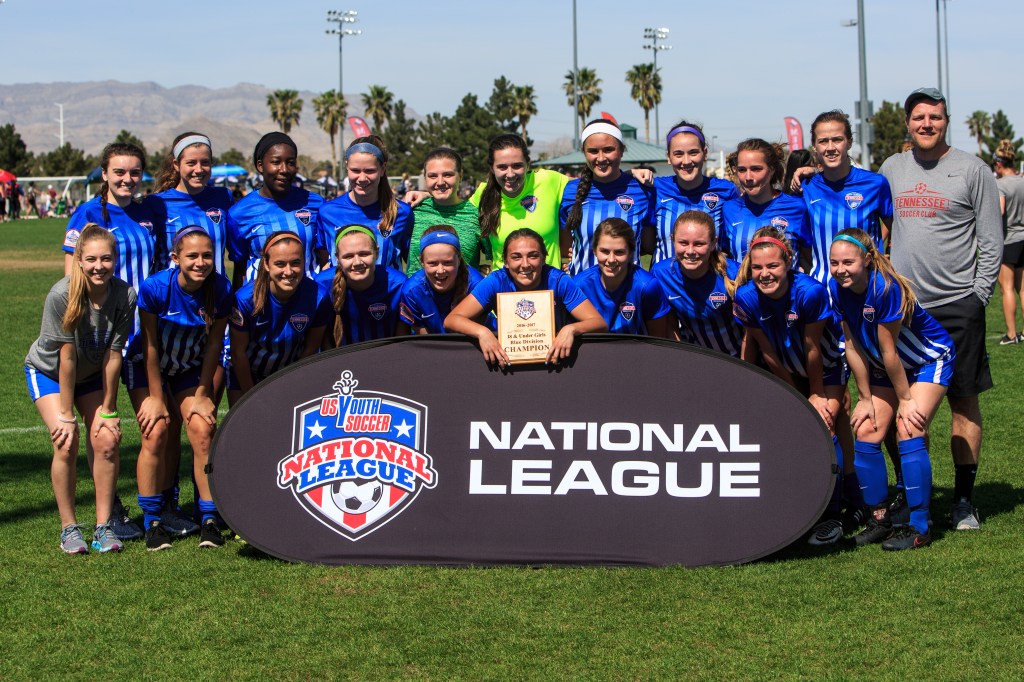
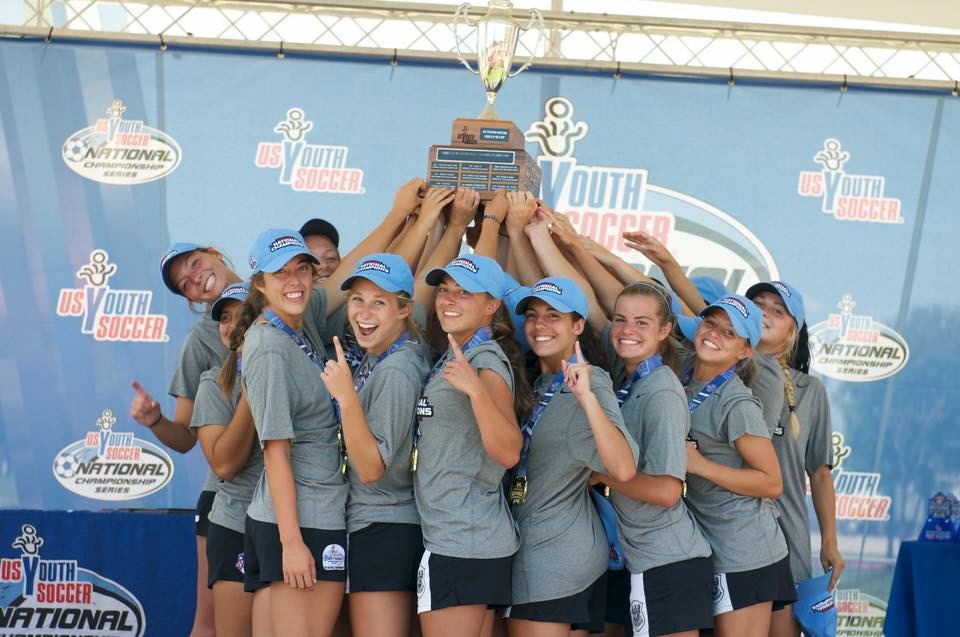
Photo courtesy of Karlie Young 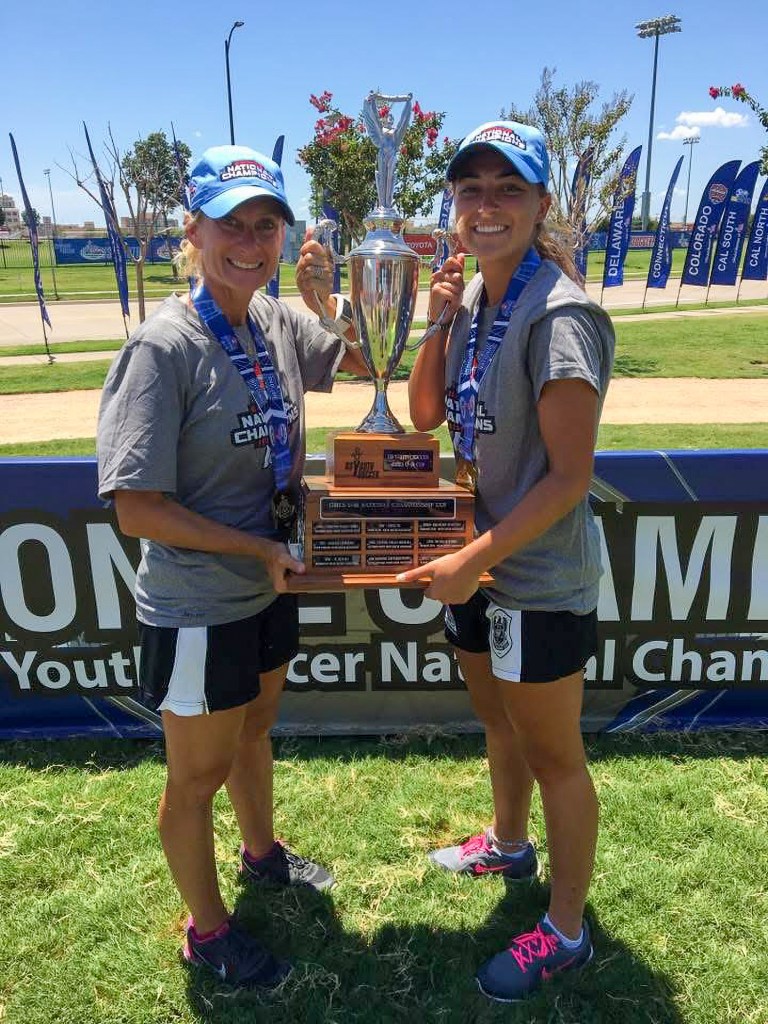
Photo courtesy of Karlie Young 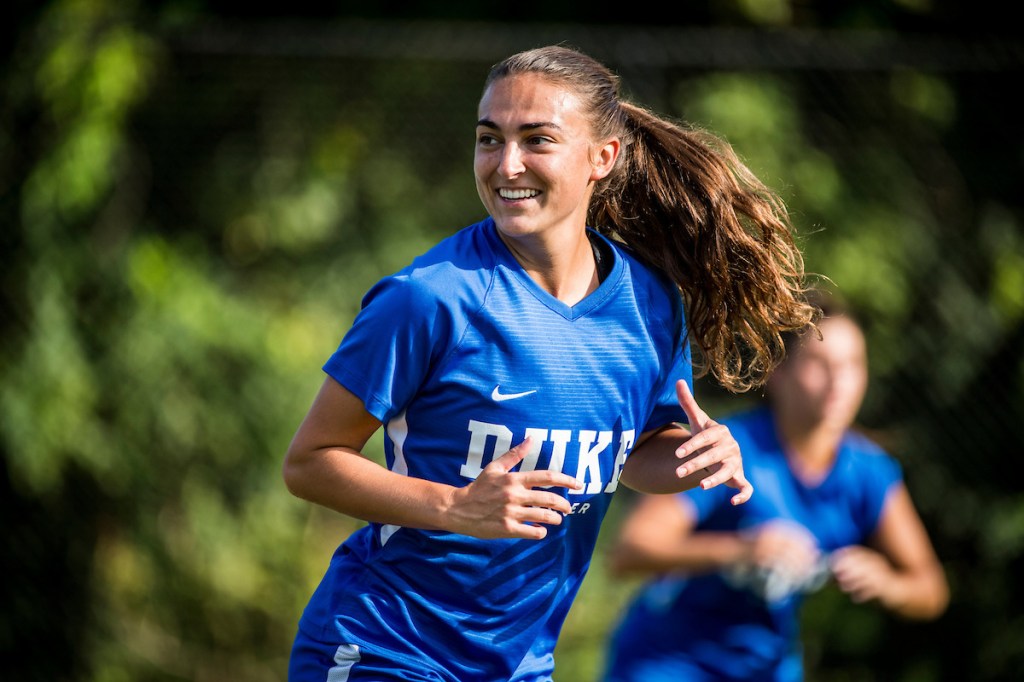
Photo courtesy of Karlie Young 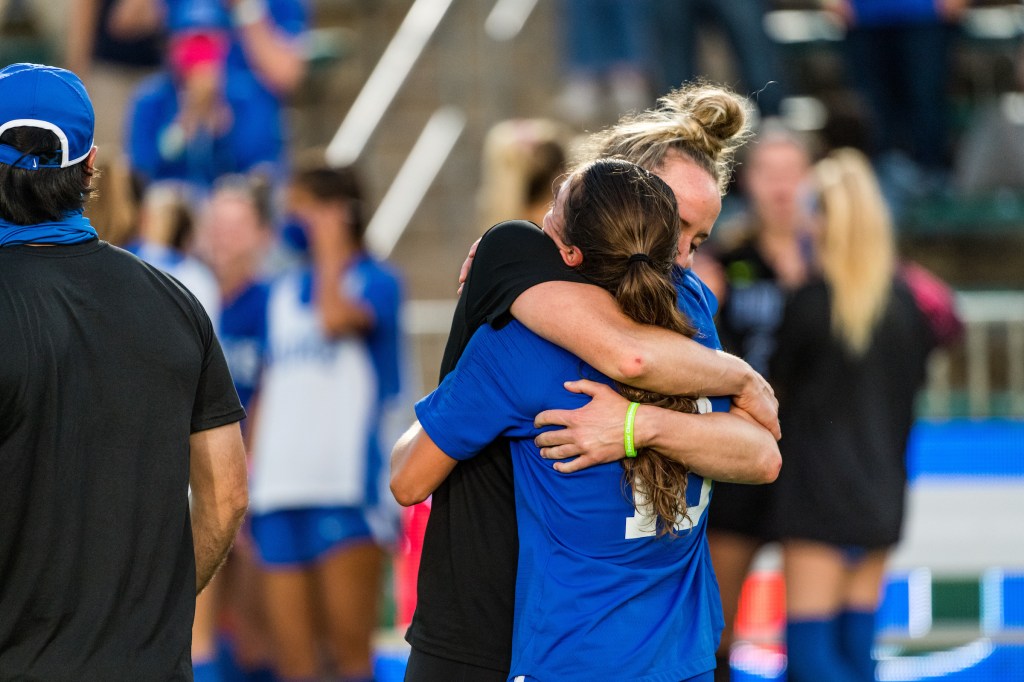
Photo courtesy of Karlie Young 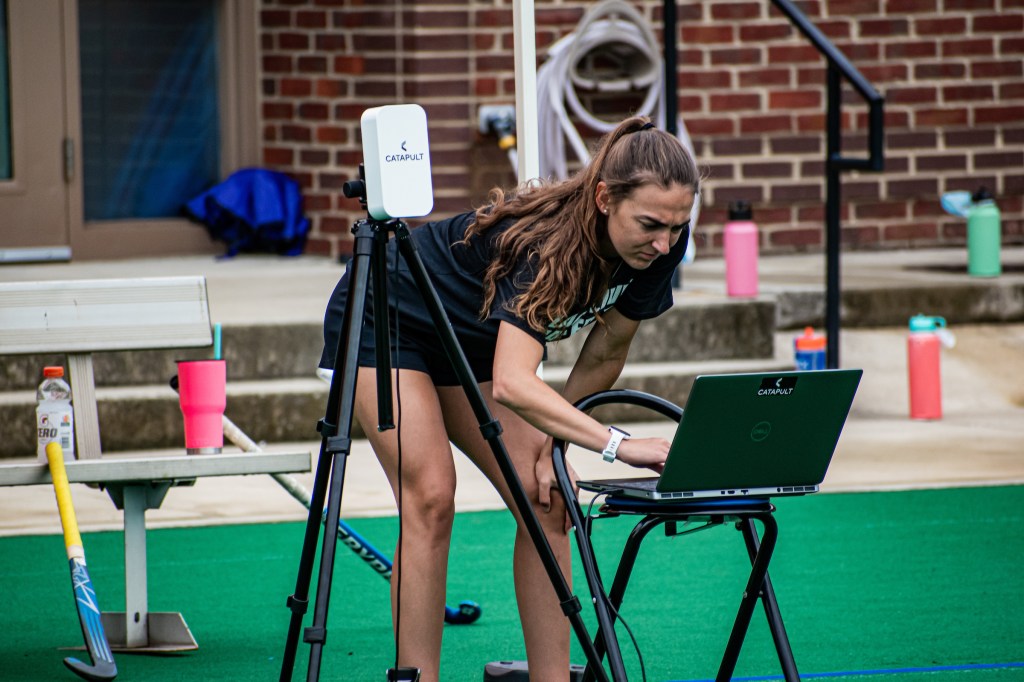
Photo courtesy of Karlie Young 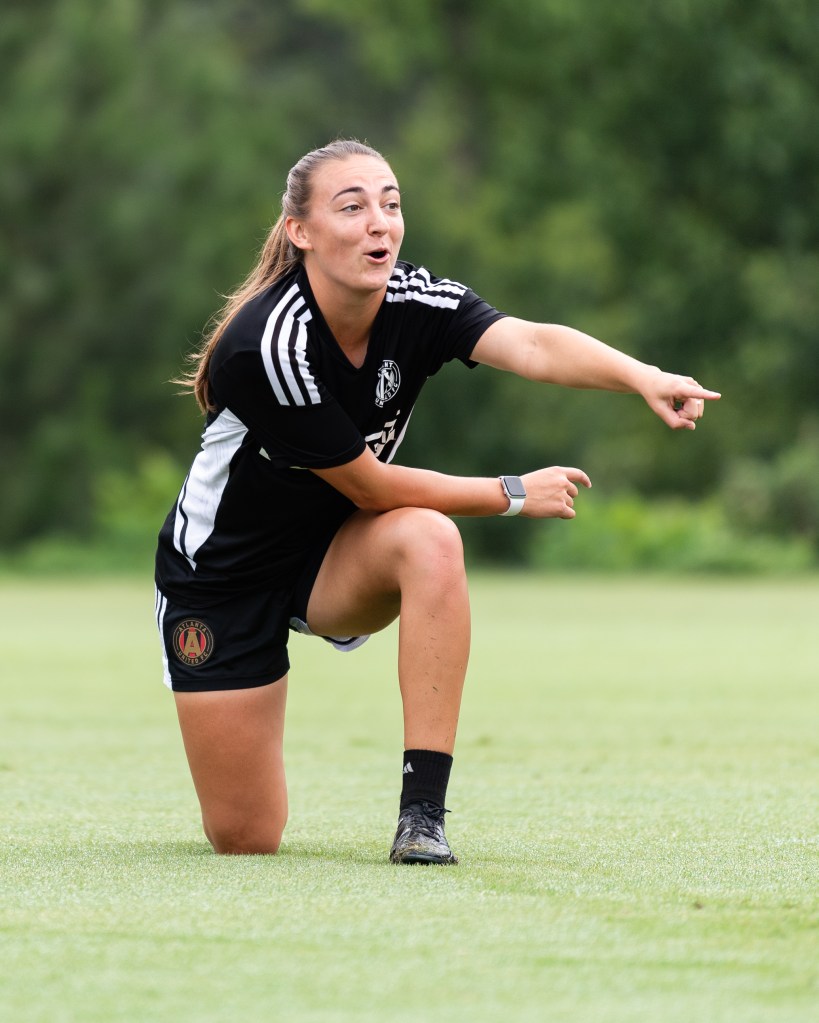
Photo by Jay Bendlin/Atlanta United 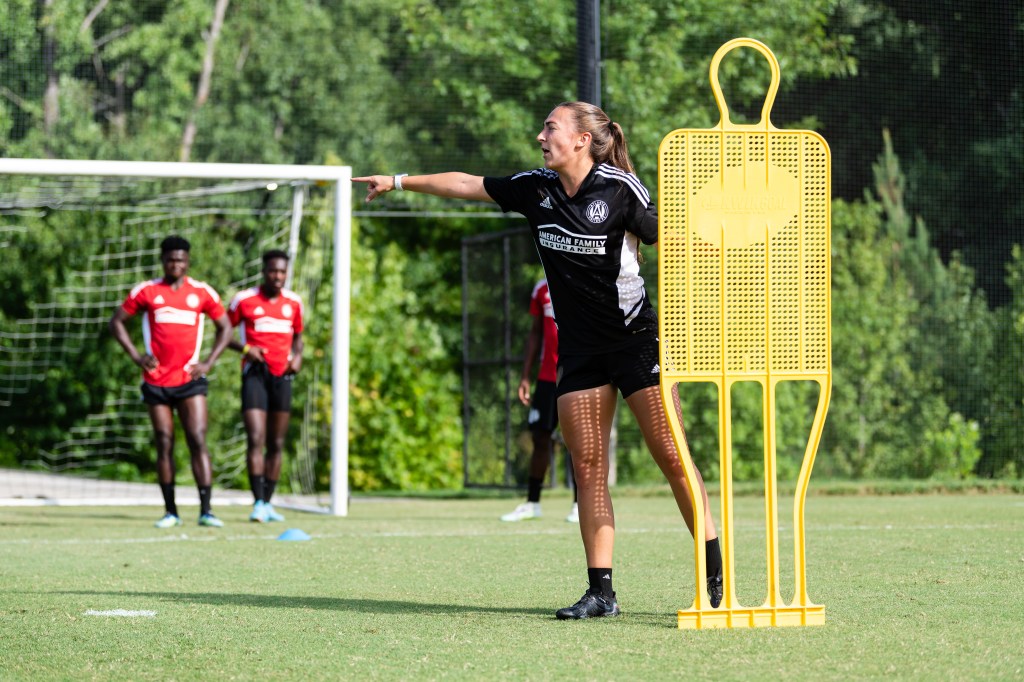
Photo by Jay Bendlin/Atlanta United 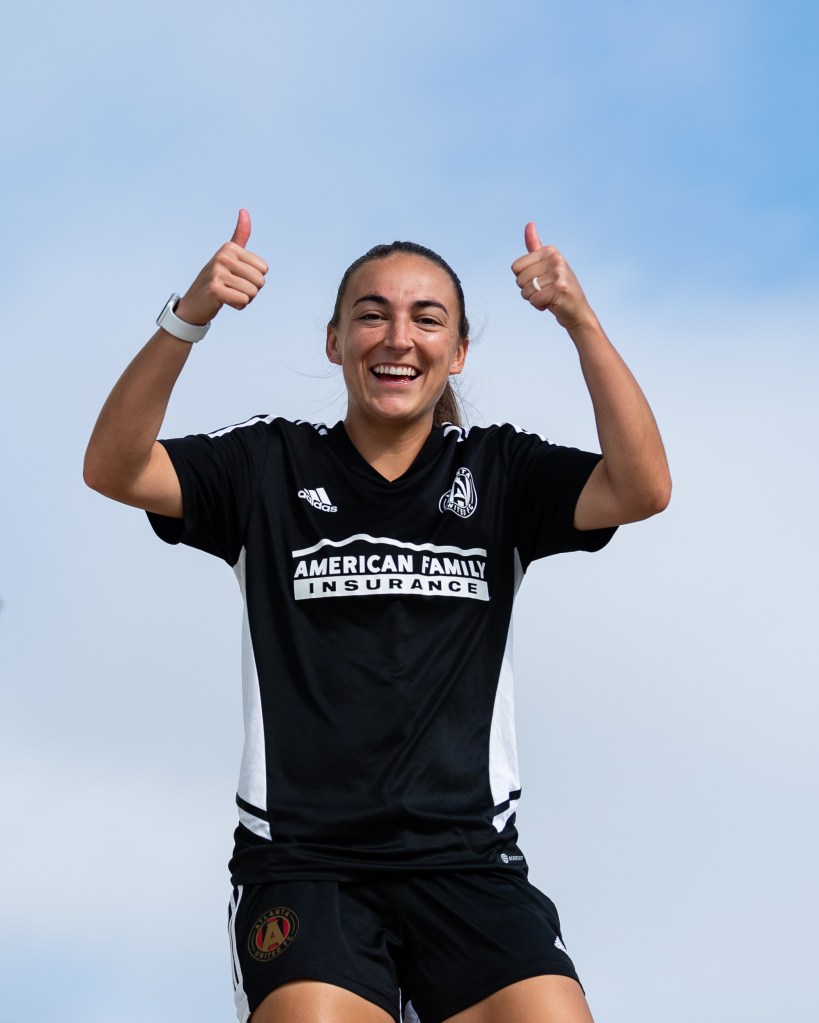
Photo by Jay Bendlin/Atlanta United 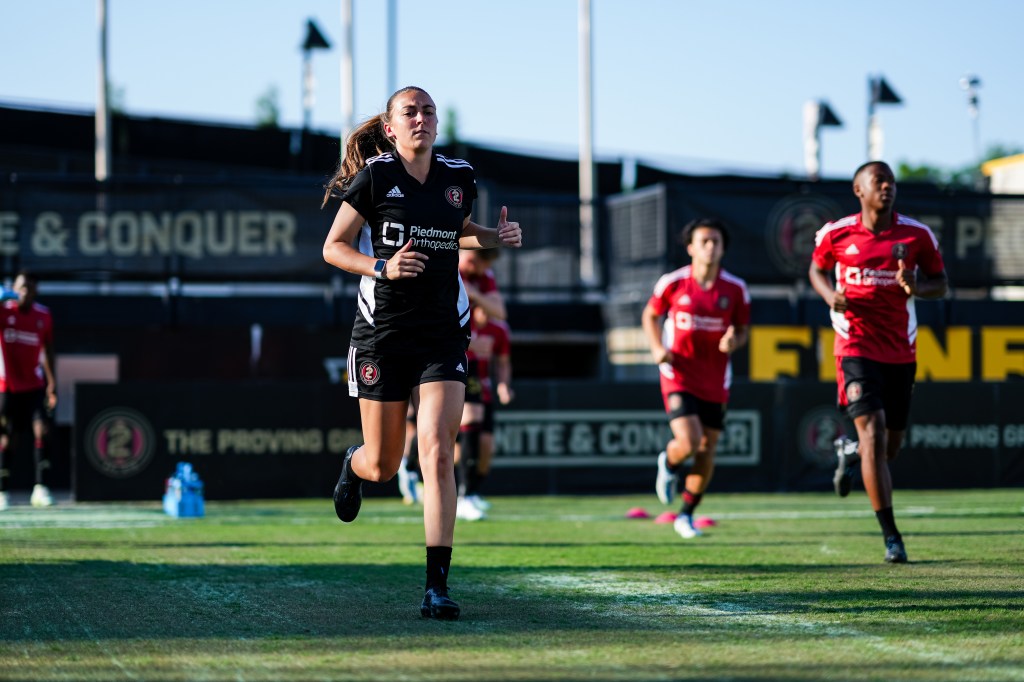
Photo by Mitch Martin/Atlanta United 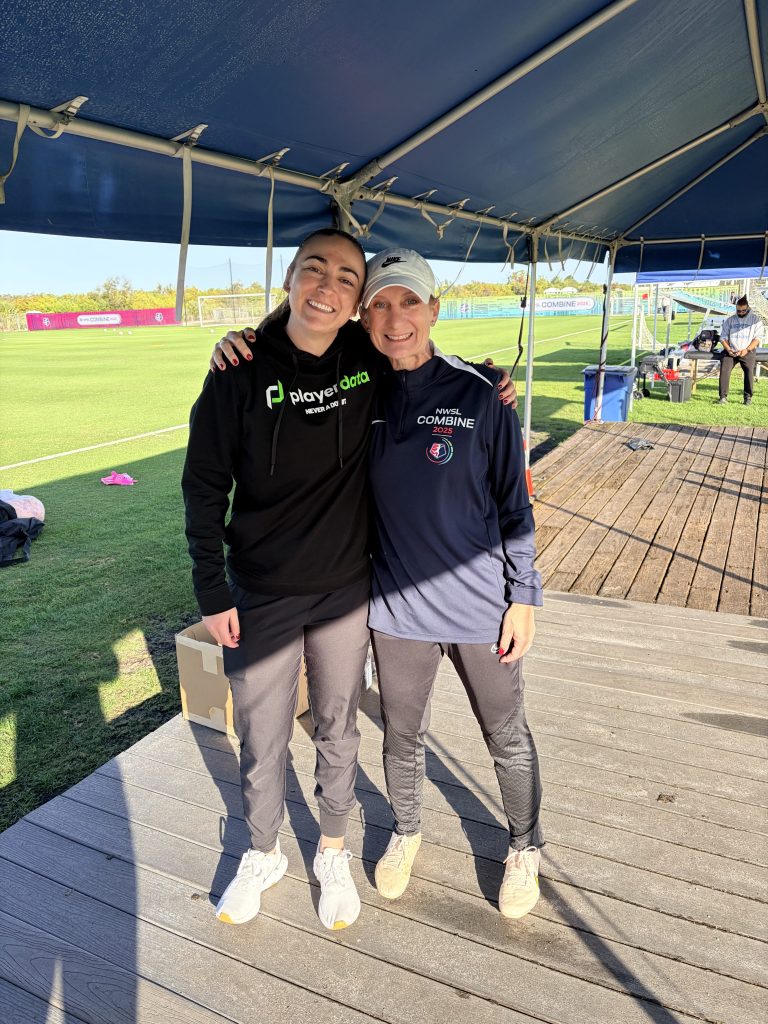
Photo courtesy of Karlie Young