If you ask her to look back on her career and choose moments that stand out, it might take Emily Spreeman (née Cressy) a few minutes. As a California native, Spreeman represented the United States on the global stage for nearly two decades before retiring in late 2025.
For most, goals and trophies would be hard to top. But for Spreeman, a two-time Deaf World Cup Champion and three-time Deaflympic Gold Medalist, the free clinics the United States Deaf Women’s National Team hosted for the deaf and hard of hearing community are what she holds most closely.
“Those experiences meant so much more than anything that showed up on a scoreboard,” Spreeman said. “Being able to give back, connect, and create opportunities for kids who might not always feel seen or included, that’s what truly sticks with me.”
Spreeman, who was born deaf herself, learned of her impairment early. Those clinics resonate so much with her because she shares a connection with the people that attend them. Deafness always has and will be a part of Spreeman’s life, but it’s never come close to stopping her on the soccer field.
Along with her teammates throughout the years, Spreeman credits her parents for being supportive and encouraging her to work hard and chase her goals.
“They always emphasized that even though I was deaf, I belonged on that field just like everyone else,” Spreeman said.
And she did.
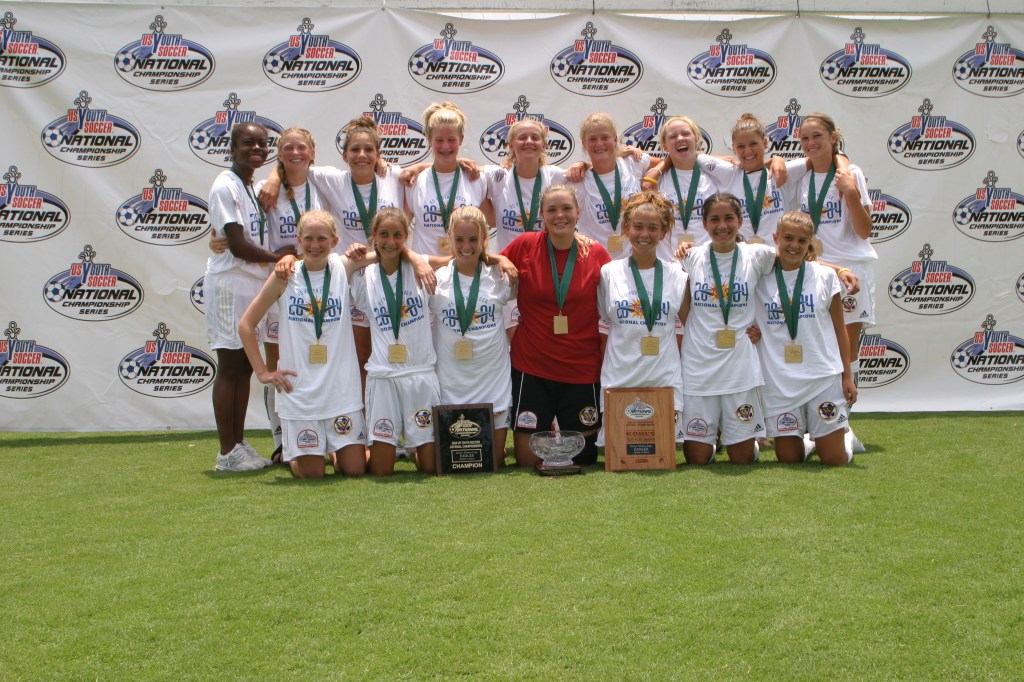
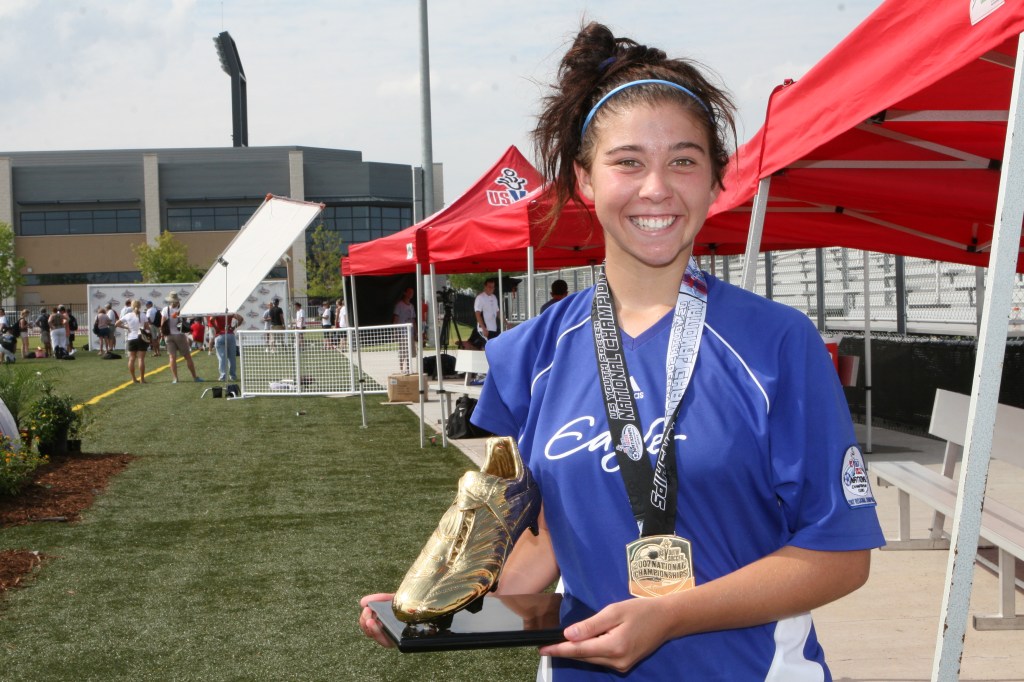
Spreeman joined the Eagles Soccer Club during her early youth years as the club attempted to make its mark in a competitive Southern California landscape. She grew with her teammates as they all learned how best to play with each other. As time passed, the team started to experience more and more success. Then, in 2004, it reached the top.
Having qualified for the US Youth Soccer National Championships, the Eagles made the cross-country trip to Orlando, Fla., to compete against the best teams in the country. All that time Spreeman and her teammates spent learning how to coexist prepared them for the challenge. After winning their first two group stage games against teams from New Jersey and Michigan, the Eagles dropped the third to Oklahoma’s Edmond Soccer Club that set up a rematch for the National Championship. Even though the first meeting ended in a loss, it proved to be important. Having a chance to scout the opponent allowed the Eagles to flip the script in the final and take home the club’s first-ever national title.
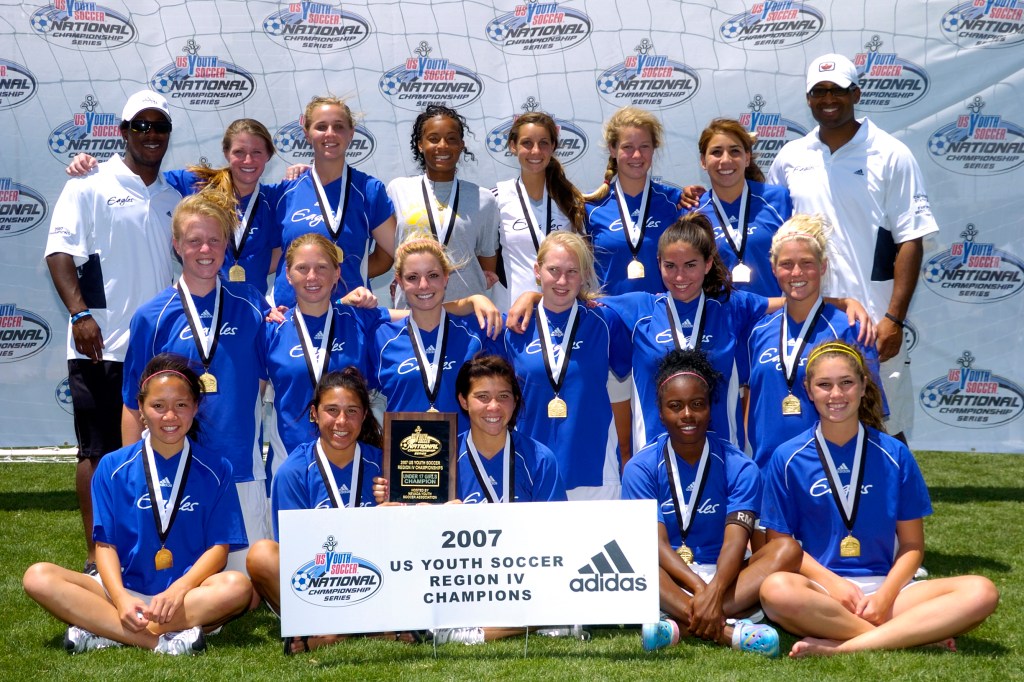
Then, three years later, they did it again.
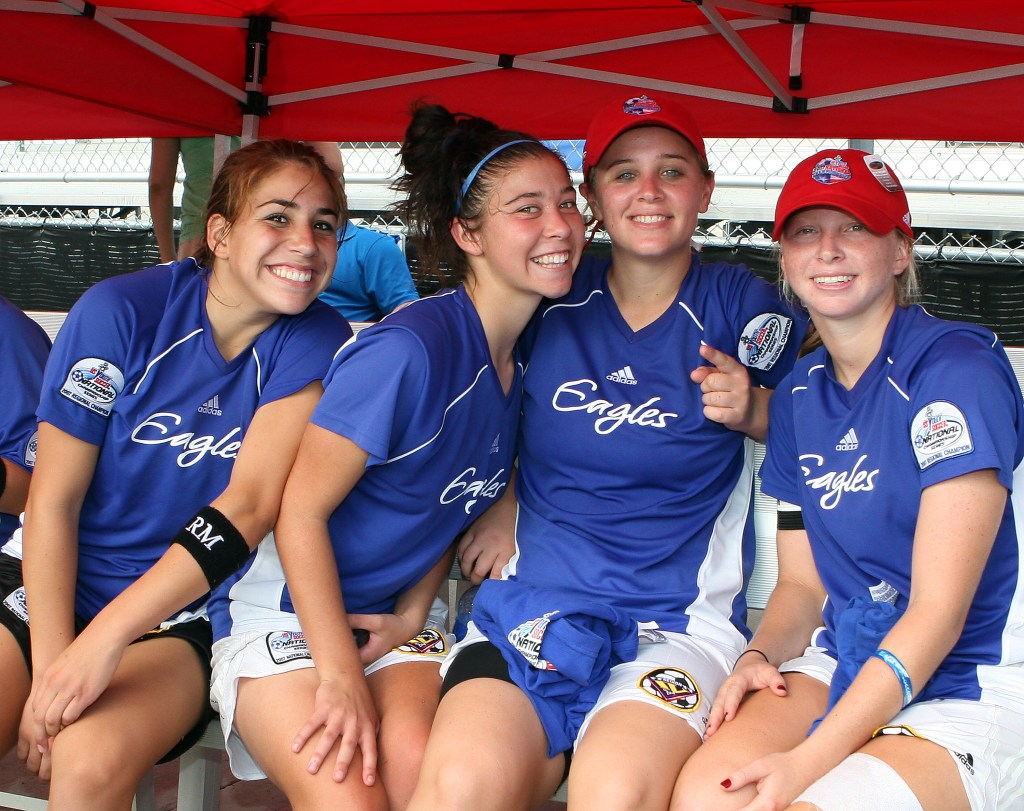
While the Eagles were able to maintain plenty of roster continuity — including Spreeman — new players like Amanda Lisberger, who would earn an invite to join the Korean Republic National Team Pool for the 2011 FIFA Women’s World Cup, helped strengthen a team that had already proven itself amongst its peers.
Spreeman’s role at the 2007 US Youth Soccer National Championships — the Eagles’ second triumph — earned her the Golden Boot award as the event’s top goal scorer.
“Winning two US Youth Soccer National Championships wasn’t just about the trophies, it felt like validation,” Spreeman said. “All the early mornings, long drives, tough training sessions, and sacrifices finally had something tangible attached to them. It was proof that the work we did mattered.
“The Golden Boot made it even more special. Scoring goals is always exciting, but earning that recognition on a national stage gave me confidence. It made me believe I could be a difference-maker in big moments — not just a contributor.”
In between the two titles with US Youth Soccer, Spreeman was growing her legend elsewhere. In 2005, she tried out for — and made — the U.S. Women’s Deaf National Team at just 15 years old. It was a completely different experience than what she had been used to with the Eagles Soccer Club.
“Walking into that environment, I immediately felt a sense of pride,” Spreeman said. “Not just as a player, but as a person. It was bigger than soccer. It was about identity, representation, and being part of something that meant so much to so many people.
“Communication was naturally at the center of everything. Whether through sign language, visual cues, or just heightened awareness, there was a deeper level of connection and intentionality. Everyone was fully present. It changed my perspective on the game. It reminded me that soccer can be a platform for inclusion, pride, and connection beyond just wins and losses. That first camp wasn’t just about earning a spot; it was about finding a new kind of belonging.”
Spreeman went on to start all six matches for the team during its gold medal campaign at the 2005 Summer Deaflympics in Australia — the first event of its kind for women.
She also participated in US Youth Soccer’s Olympic Development Program (ODP) with Cal South, where she was teammates with Alex Morgan. Together, the two goal scorers helped lead their team to the 2006 ODP National Championship.
ODP, which put Spreeman and Morgan up against the best players from every region, helped both players grow. It forced Spreeman to sharpen her technical skills, think quicker, and become more consistent. Competing against players of that level raised Spreeman’s standard, too.
“Training and competing with players like Alex… It showed me what was possible and gave me a clearer vision of what the next level required,” said Spreeman. “There were definitely signs that Alex Morgan had something special. Even at a young age, she had an incredible instinct around goal. She made smart runs, stayed composed in big moments, and had this quiet confidence about her. She was competitive in the best way — she wanted to improve every day and never seemed satisfied.”
Instead of returning to the Deaf National Team, Spreeman elected to step away for a few years and pursue a collegiate career at the University of Kansas in 2007. It was another welcome change.
“It felt like entering a whole new world, faster, stronger, and more demanding in every way,” Spreeman recalled. “The biggest adjustment was the pace and physicality. Everyone at that level was a standout player in their own right, so the margin for error was much smaller.”
Spreeman elected to redshirt and acclimate to the program during that first year in Lawrence. It had pushed her to mature quickly — both as an athlete and person. But after just one year on the sidelines, Spreeman was ready to be back on the field and play.
During her redshirt freshman season in 2008, she appeared in all 23 matches, scored eight goals, and was named the Big 12 Rookie of the Year. As an encore, Spreeman again featured in every match in 2009 and tallied 12 goals. She ended her career at Kansas with 23 goals and six assists in 60 matches.
After her three years with the Jayhawks, Spreeman was nearing her return to the Deaf National Team, but first won two United States Adult Soccer Association (USASA) National Championships with Eagles in 2010 and 2011 to bring her tally to four.
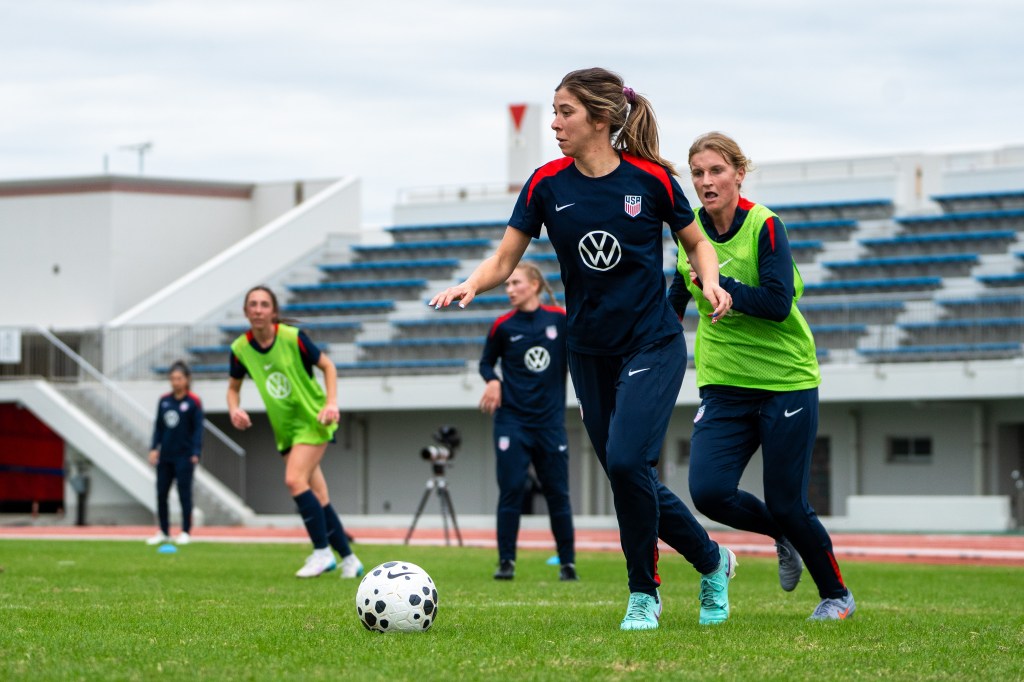
By the time Spreeman made it back to camp, new faces were all around her. Two — Kate Ward and Sydney Andrews — had experienced their own share of success, as both had Deaf World Cup Championships and Deaflympic gold medals to their name. Both were well aware of what Spreeman brought to the team, though.
“I heard so much about Emily — this young phenom from the 2005 Deaflympics,” Ward remembers. “She was a legend before she returned.”
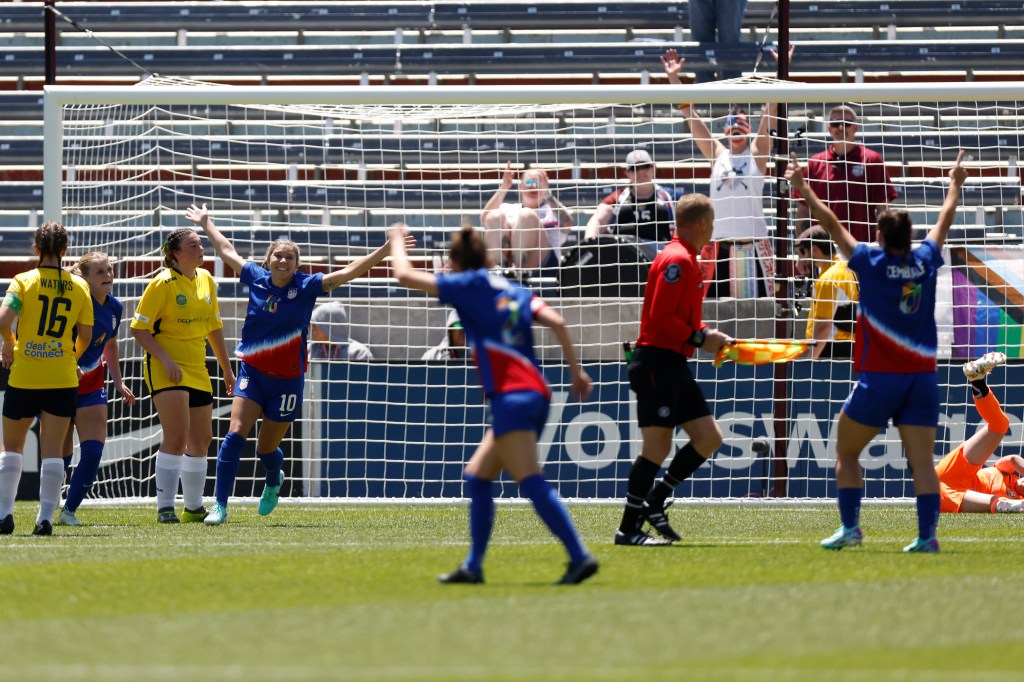
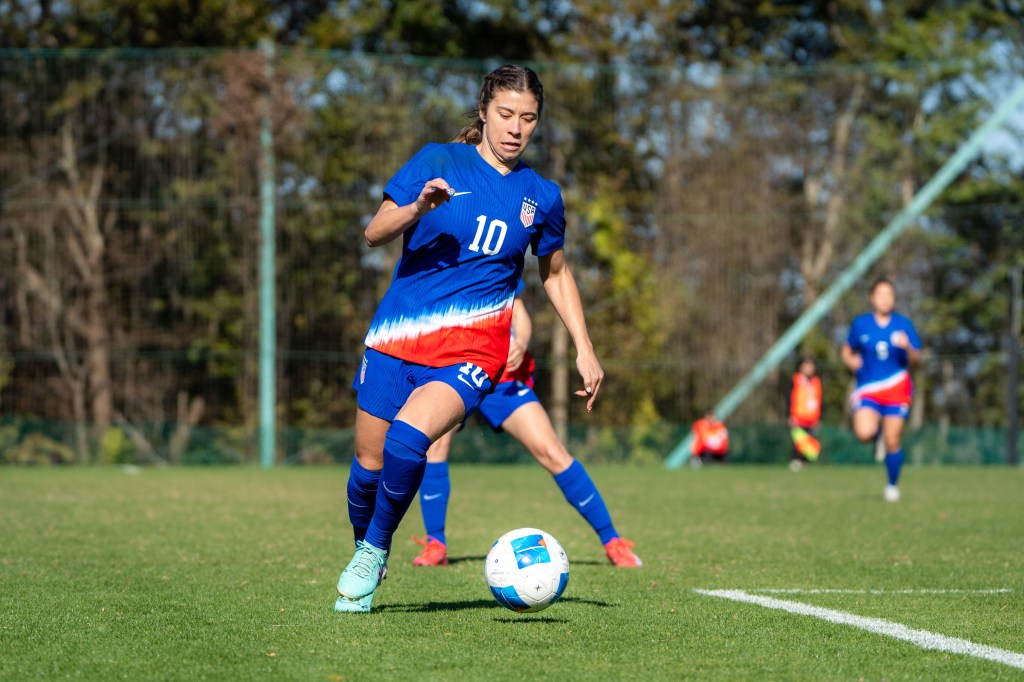
Then, Spreeman did return and made an immediate impact. She helped lead the United States to the 2016 World Deaf Championship — her first — and earned both the event’s Golden Boot and Golden Ball. A few years later, Spreeman and her teammates won gold at the 2022 Deaflympics. They continued their winning ways in 2023, when the team won its third World Deaf Championship. Spreeman had again been named both the Golden Boot and Golden Ball recipient and then later that year received the inaugural U.S. Soccer Female Deaf Player of the Year Award. To Ward, those honors were deserved.
“She put our team on her back in one of our group games in Malaysia at the 2023 World Deaf Football Championships,” she said. “We were down 1-0 and just not playing very well against our biggest rival at the tournament, Poland. It was a moment where she seemed to will us to a win through sheer determination and grit — scoring two goals in the second half to lead us to a 2-1 win.”
Spreeman did a lot of scoring. The following year, against Australia, she scored a record-setting six goals in a single match, passing Carli Lloyd, Michelle Akers, and former ODP teammate Alex Morgan, who had each scored five during a game for a U.S. Women’s National Team.
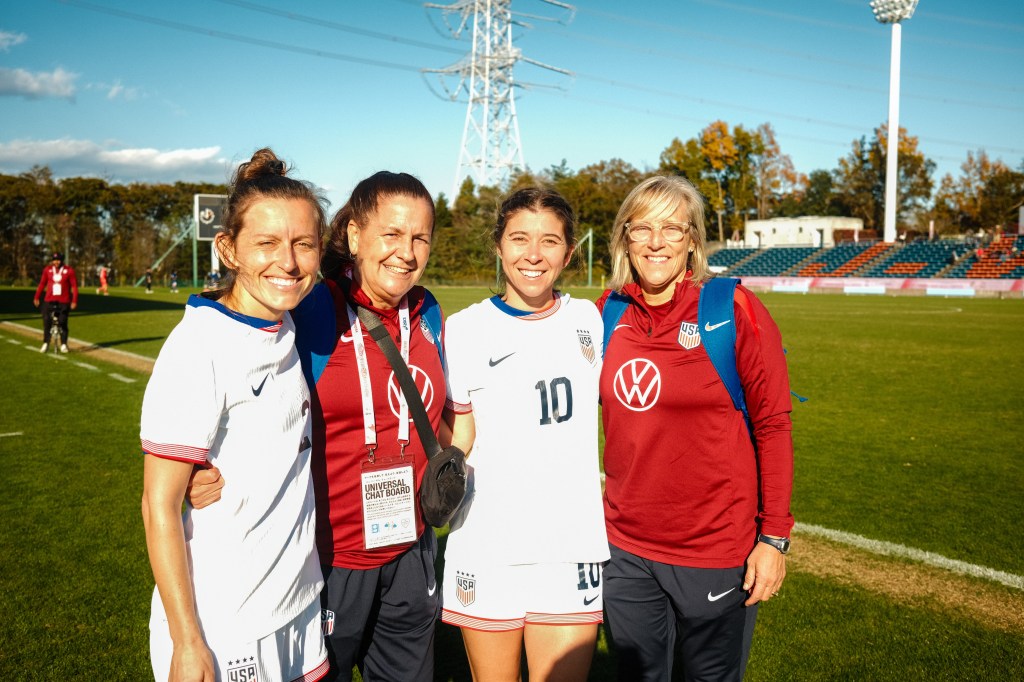
Then, the Spreeman, Ward and Andrews trio decided that the 2025 Deaflympics would be the last time they put on the Stars and Stripes.
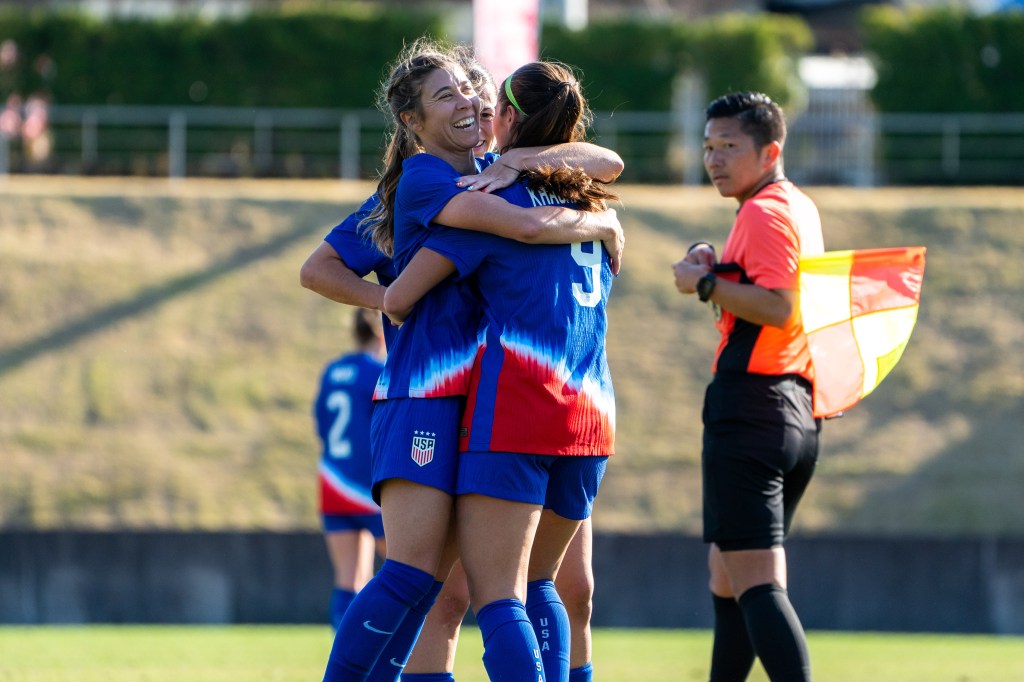
For a team that only knew how to win, it was no different. They finished off a dominant stretch with a win against host country Japan, in a match where Spreeman scored twice to reach a record 50 goals for the Deaf Women’s National Team. The last goal she scored ended up being her favorite. With the team up 2-0, Spreeman got away from her defender and headed home a cross from Gracie Fitzgerald.
“It felt like all the hard work, dedication, and years I had put into the game really paid off,” Spreeman said about the goal. “It was a special way to close that chapter of my life, and it’s a moment I’ll always remember.
“Representing the United States meant everything to me. It was an incredible honor to wear the jersey and represent not only my country, but also the deaf community. Every time I stepped on the field, I felt proud knowing I was playing for something bigger than myself.”
And Spreeman was. Many of the younger players on the Deaf National Team have followed the footsteps of her, Ward, and Andrews. Some, like Chelsey Tumey and Josephine Blazic, are involved with the Olympic Development Program. Passing the torch is important for Spreeman.
“If my journey can inspire other deaf athletes to believe in themselves and chase their goals, then that’s really special,” she said. “Growing up, opportunities and role models in the deaf sports community weren’t always as visible, so knowing that younger players can look at my path and see what’s possible means a lot.”
Ward, who remembers having to bring her own white shirt, black shorts, and soccer ball during her first few training camps, agrees.
“I hope that our impact stretches beyond our team’s achievements on the field, and that we are defined by the passion, commitment, and care we put into leaving this game in a better place for the next generation.”
While Spreeman — and Ward and Andrews — have hung up their cleats, they continue to advocate for disability soccer. There may not be anyone better suited for the job, either. The Deaf Women’s National Team has never lost — going 44-0-1 since beginning in 2005 — and that trio was part of many of those wins. Ward, who is the Executive Director of Programming & Partnerships for USA Deaf Soccer, Vice Chair of the Disability Soccer Committee, and a member of the U.S. Soccer Board of Directors, remains just as busy now as she was in her playing days.
And for Spreeman? There’s one thing she wishes more people knew about deaf athletes.
“We want people to see our ability rather than focus on our disability,” Spreeman said. “Being deaf is a part of who we are, but it doesn’t define what we can achieve on the field.”
Top image courtesy of Emily Spreeman